Every few weeks, another model drops and the internet collectively loses its mind. "This changes everything." "GPT-killer." "The best model ever released." Then two weeks later, a new one comes out and the cycle repeats.
If you run a business and you're trying to actually make a decision — not follow the hype — this guide is for you. No benchmark theater. No affiliate rankings. Just an honest look at what's available in 2026, what each model is genuinely good at, and how to think about which one belongs in your stack.
Fair warning: there is no single best large language model. Anyone who tells you otherwise is selling something.
Why This Got So Hard to Follow
A year ago, picking an LLM was simpler. You had OpenAI on one side, Google catching up, and Anthropic as the thoughtful alternative. That picture has completely changed.
Open-source models have closed the gap with proprietary ones faster than most people predicted. Chinese labs like DeepSeek and Alibaba's Qwen team are putting out models that outperform things that cost ten times more. And the sheer volume of releases — over 250 frontier-class model launches in Q1 2026 alone — means staying current is basically a full-time job.
The good news is that for most business use cases, the decision tree is actually simpler than the noise suggests. You don't need the best model. You need the right one for your specific situation.
<br />The 10 Best Large Language Models of 2026
-
GPT-5.4 - The Safe Default
-
Gemini 3.1 Pro - The Reasoning Specialist
-
Claude Opus 4.6 - The One That Actually Reads
-
Claude Sonnet 4.6 - The Practical Shortcut
-
Gemini 3 Flash - Speed Above All
-
Meta Llama 4 - For Teams That Can't Use the Cloud
-
DeepSeek V3.2 - The Budget Move That Actually Works
-
Grok 4 - Niche, But Real
-
Qwen 3.5 - The Overlooked One
-
Mistral - The European Option
<br />
GPT-5.4 — The Safe Default
If someone put a gun to my head and said pick one model for a business that doesn't want to overthink it, I'd say GPT-5.4. Not because it tops every benchmark — it doesn't — but because it's the most consistently capable model across the widest range of tasks. Knowledge work, coding, summarization, customer-facing applications — it handles all of it without major weak spots.
It also has the largest ecosystem of integrations, plugins, and enterprise tooling of any model available. For a business that wants to move fast without hiring a team of ML engineers, that matters more than raw benchmark performance.
Gemini 3.1 Pro — The Reasoning Specialist
Google's flagship is genuinely impressive in ways that don't always get enough credit. On scientific reasoning benchmarks, it sits at the top of the field — 94.3% on GPQA Diamond, which measures graduate-level reasoning across technical domains. If your business involves anything data-heavy, research-intensive, or scientifically complex, Gemini 3.1 Pro is worth a serious look.
It also has a natural home on Vertex AI for teams already running Google Cloud infrastructure. That's not a small thing. Switching costs are real, and if your data and compute are already in GCP, keeping your model there too simplifies a lot.
Claude Opus 4.6 — The One That Actually Reads
Here's an honest take: Claude writes like a person more than any other frontier model right now. The prose rhythm is different. The tone doesn't drift mid-document. It handles nuance and subtext in ways that other models flatten.
For legal teams, communications, content operations, policy work — anything where language quality genuinely matters — Opus 4.6 is a tier above. It also handles long documents exceptionally well, which is useful for any workflow involving contracts, reports, or dense technical material.
Claude Sonnet 4.6 — The Practical Shortcut
Most businesses don't actually need Opus. Sonnet 4.6 sits just below it in capability but at meaningfully lower cost, and for the vast majority of workflows, the gap is barely noticeable. It recently started leading user-preference benchmarks in knowledge work categories, which suggests real-world performance is catching up to what the higher-priced models were delivering six months ago.
If you're evaluating Anthropic's models for the first time, start here.
Gemini 3 Flash — Speed Above All
Some workloads don't need a philosopher. They need an answer in 200 milliseconds, at scale, without breaking the budget. Gemini Flash is built for exactly that: chatbots, real-time dashboards, high-volume API calls, anything where throughput and latency matter more than depth.
It is not the model you use to draft a board presentation. It is absolutely the model you use if you're processing fifty thousand customer queries a day.
Meta Llama 4 — For Teams That Can't Use the Cloud
Data sovereignty is a real constraint for a lot of industries. Healthcare, defense, finance, government — if your data cannot leave your infrastructure, your options are limited. Llama 4 is the most capable self-hostable model available, and it's not particularly close right now.
Its context window is also remarkable — ten million tokens, which means you can feed it an entire codebase, a full legal agreement archive, or years of internal documentation in a single pass. For teams with the infrastructure to run it, this is a serious option.
DeepSeek V3.2 — The Budget Move That Actually Works
$0.28 per million tokens for frontier-adjacent reasoning. That number sounds too good to be true, and a year ago it would have been. DeepSeek has consistently surprised people who wrote it off as a second-tier option, and V3.2 continues that trend.
Strong on technical reasoning, solid at multilingual tasks, and dramatically cheaper than the US-headquartered alternatives. For cost-sensitive deployments where you still need real capability — internal tools, developer-facing features, high-volume pipelines — this is the model you should be benchmarking against your current setup.
Grok 4 — Niche, But Real
xAI's model has mostly been a headline generator, but it earned some genuine credibility with strong SWE-bench scores on agentic coding tasks. Outside of software engineering and code-heavy workflows, it's hard to make a case for it over the other options on this list. But for engineering teams specifically, it's worth testing.
Qwen 3.5 — The Overlooked One
Alibaba's Qwen 3.5 is consistently underestimated in Western markets, probably because it doesn't have the same marketing budget as OpenAI or Google. The 9B model scores 81.7% on GPQA Diamond at $0.10 per million tokens. That is an extraordinary price-to-performance ratio for anything requiring technical or multilingual capability.
If your business operates across multiple languages, or you're running high volumes of technical queries on a tight budget, this is the one most people aren't talking about but should be.
Mistral — The European Option
For organizations operating under GDPR or dealing with data residency requirements in European markets, Mistral offers something the American providers can't easily match: a credible frontier-class model from a company headquartered in France, with a strong open-source commitment. The performance isn't quite at the level of the top five on this list, but for organizations where compliance drives the decision, capability is only part of the equation.
The Thing Nobody Says Loudly Enough
Picking the right LLM is genuinely important. But it's not the most important AI decision your business will make in 2026.
The bigger question is what you're actually trying to accomplish, and whether a general-purpose language model can accomplish it at all.
Take construction and infrastructure as an example. You can give GPT-5.4 a photograph of a job site and ask if the workers are wearing proper PPE. You'll get an answer. Whether that answer is reliable enough to stake a safety program on is a very different question.
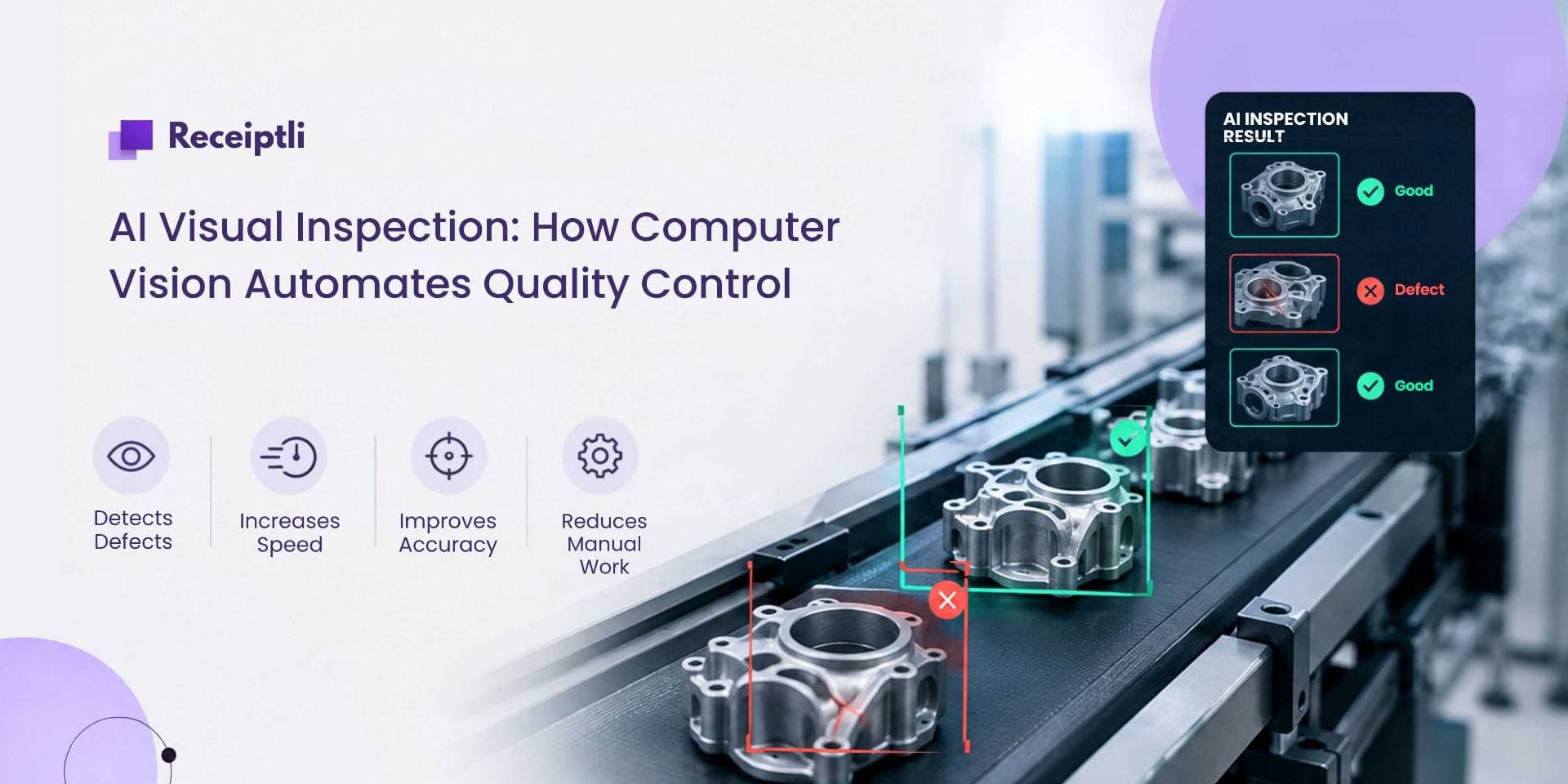
This is where companies like Aeyron Technologies do work that frontier LLMs simply aren't designed for. Aeyron's Safesense product handles real-time PPE detection using computer vision trained specifically for field conditions - variable lighting, angles, occlusion, all the things that make a general vision model unreliable in practice. Their drawing intelligence tooling, built on Receiptli infrastructure, extracts structured data from engineering drawings at a level of accuracy that a general model prompting its way through the same task can't match.
The best enterprise AI stacks aren't built around one model. They're built around a frontier LLM handling language, reasoning, and general-purpose tasks plus purpose-built tools handling the domain-specific work that requires actual specialization. Getting that architecture right matters more than which frontier model you pick.
So Which One Should You Actually Use
Genuinely depends. But here's a quick framework.
If your data can't leave your servers, start with Llama 4. If cost is the primary constraint, run a DeepSeek or Qwen evaluation before committing to anything pricier. If writing and document quality are what matter most, Claude Opus 4.6. If you need raw reasoning for technical or scientific work, Gemini 3.1 Pro. If you want reliability across the broadest possible set of tasks, GPT-5.4 is the defensible default.
And if what you need isn't really a language model at all if it's a system that understands your industry's specific data, visual environment, or technical domain pair whatever LLM you choose with tools that were actually built for that problem.
The model is a starting point. The stack is what matters.
Aeyron Technologies
· 7 min read