Most AI explainers are written for the wrong person.
Too technical and you lose the founder who just needs to know whether to budget for this. Too simplified and you lose the credibility of anyone who has actually worked with these systems. This one is written for the person in the middle. The business leader who needs a clear enough picture to make good decisions. Not a PhD. Just clarity.
So. What is AI?
Artificial intelligence is software that learns from data instead of following rules a programmer wrote. That is the core of it. Traditional software does exactly what it is told. If this happens, do that. AI looks at millions of examples of something, figures out the patterns underneath, and uses those patterns to handle situations it has never explicitly seen before.
That shift from rule-following to pattern-learning is what makes modern AI genuinely different from the software businesses have always run on. And it is why 2026 looks the way it does.
The Types That Actually Matter for Business
There is not one AI. There are several and they do completely different things. Here is the short version before we go deeper:
- Generative AI — Creates content. Text, images, video, audio, code.
- Predictive AI — Looks at your data and forecasts what happens next.
- Conversational AI — Understands human language and responds in real time.
- Automation AI — Handles repetitive tasks without human input.
- Analytical AI — Finds patterns in data too large for a human to process manually.
- Computer Vision AI — Interprets visual information from images and video.
Most businesses end up using more than one. Some are already using two or three without realizing it. Let us go through each one honestly.
Breaking Each One Down
1. Generative AI
This is the category dominating the conversation right now. And genuinely for good reason.
Generative AI produces content. The blog draft someone on your marketing team edited last week. The campaign visuals. The chatbot response your customer got at midnight. There is a decent chance generative AI touched all three.
Here is the thing business leaders need to understand though. It is not searching for answers. It is generating them based on patterns it learned during training. Confident output and accurate output are two different things entirely. The model does not know when it is wrong. It just knows what pattern fits next.
That is not a reason to avoid it. It is a reason to build human review into the workflow from day one.
Business applications: Content production, copywriting, image and video generation, code, internal documentation, proposals.
2. Predictive AI
This one has been inside business software longer than most people realize.
The CRM flagging high-intent leads. The finance platform projecting next quarter. The inventory system suggesting reorder quantities. Predictive AI has been running quietly in the background of these tools for years. What has changed is the sophistication and the accessibility. Models that needed a data science team to build are now configurable without deep technical knowledge.
For decision-makers the value is straightforward. Less guesswork behind calls you were already making anyway.
Business applications: Sales forecasting, churn prediction, demand planning, financial modeling, risk assessment.
3. Conversational AI
If your mental model of this is still the frustrating chatbot loop from a few years ago, it needs updating.
Modern conversational AI holds context across long exchanges, handles nuance, and routes to a human when the situation actually requires one. The gap between 2021 and 2026 here is genuinely large. For customer-facing businesses it has changed the math on support operations significantly. And increasingly it is being used internally too. AI that helps employees find information and complete tasks without raising a ticket every time. Less exciting to talk about. Probably more valuable in practice.
Business applications: Customer support, lead qualification, internal knowledge management, onboarding, scheduling.
4. Automation AI
Take any task in your business that happens more than ten times a week, follows the same steps, and does not require a judgment call in the middle. That is your automation candidate.
Invoice processing. Email routing. Compliance checks. Data entry. These eat real hours every week across most organizations. Automation AI handles them without variation, without fatigue, and without needing the process explained again every few months when someone new joins the team.
The business case here is usually the easiest to build. Count the hours. Cost the hours. Compare to the cost of automating. For most repetitive workflows the math is not complicated.
Business applications: Document processing, workflow automation, compliance monitoring, report generation, email management.
5. Analytical AI
Most businesses are not short on data. They are short on time to do anything useful with it.
Analytical AI processes at a scale no human analyst can match. Pattern recognition, anomaly detection, segmentation, trend identification across years of operational or customer data. It surfaces things that would take weeks to find manually and delivers them fast enough to actually influence the decision that is happening right now.
Business applications: Business intelligence, customer segmentation, fraud detection, performance analysis, competitive benchmarking.
6. Computer Vision AI
This one tends to feel distant until you hear the specific applications.
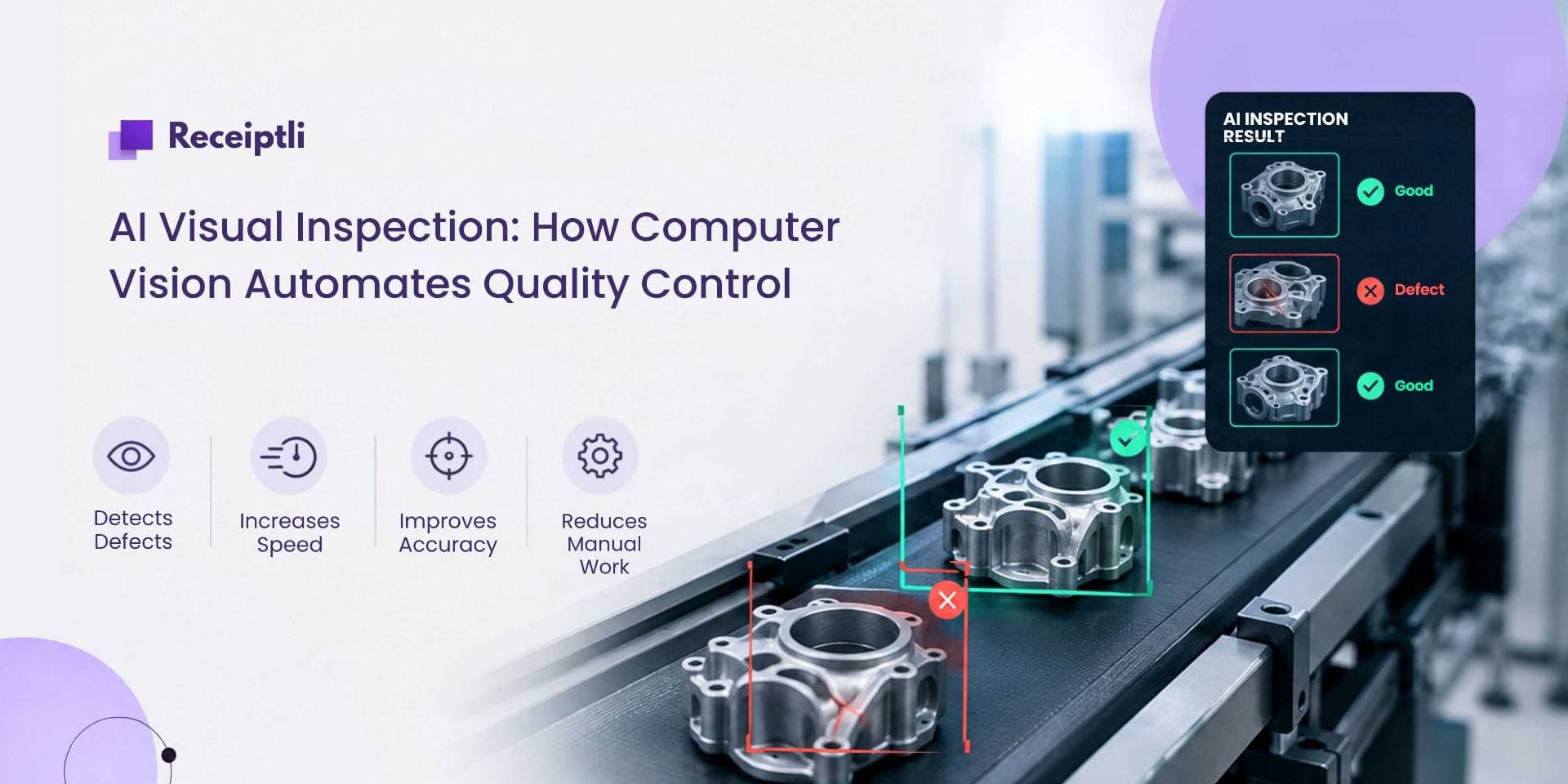
Quality control on a production line catching defects a human eye misses. Retail analytics measuring which shelf placements drive actual conversions. Document scanning that pulls structured data out of unstructured paperwork at volume. If your business deals with physical products, physical spaces, or large volumes of visual documents, computer vision is probably more relevant than it first seems.
Business applications: Quality assurance, security monitoring, retail analytics, document processing, identity verification.
What AI Is Not
This part is as important as everything above.
AI is not a decision-maker. It informs decisions. The accountability for what your business does with AI output sits with the humans who reviewed it. That is not a disclaimer. It is just accurate.
AI is not reliable without oversight. Generative AI produces confident wrong answers sometimes. Predictive models are only as good as the data they trained on. Every category has failure modes and pretending otherwise is how businesses end up in trouble.
AI is not plug and play. The organizations seeing real results in 2026 invested in integration, workflow design, and building feedback loops that improve output over time. Signing up for a tool is five percent of the work.
How Aeyron Approaches This
We do not start with tools. We start with the problem.
Every engagement begins with understanding what is actually slowing a business down or limiting what it can offer. Then we map which AI categories apply to those specific problems. Then we build workflows around them that produce measurable results rather than impressive demos that quietly get shelved three months later.
We have done this across content operations, customer experience, product development, and internal workflow automation. The tools change depending on what the work requires. The process stays consistent.
If you are past the curiosity stage and ready to figure out what AI means for your specific business in 2026, that is the conversation we have every day at Aeyron.
Aeyron Technologies
· 5 min read