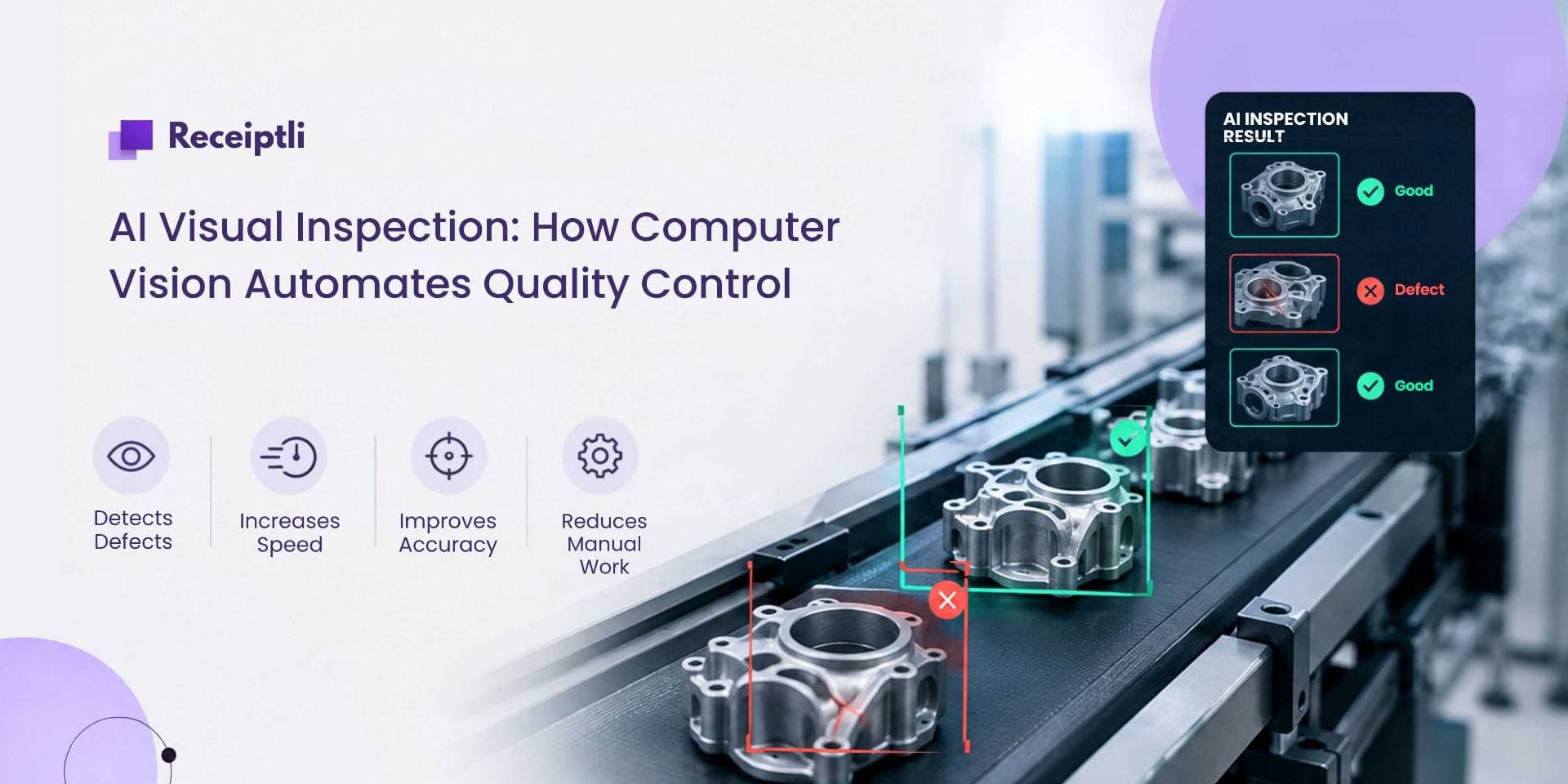
One of the most influential areas of artificial intelligence nowadays is computer vision. It enables machines, computers, gadgets, or camera-equipped systems to perceive, decipher, and comprehend visual data from pictures and videos.
And now more than ever, that is important.Every day, businesses produce enormous volumes of visual data. security video. Factory inspections ands medical scans. cams in stores. It's just too much for humans to handle. This is where AI computer vision comes in, giving formerly laborious and manual jobs automation, precision, and scalability.n bringing automation, accuracy, and scalability to tasks that were once manual and slow.
In this guide, we’ll walk through what computer vision is, how it works, and real-world computer vision use cases that are already delivering measurable business value.
WHAT IS COMPUTER VISION?
Computer vision is a field of artificial intelligence that enables machines to extract meaningful information from visual inputs such as images, videos, and live camera feeds.
Instead of relying on human interpretation, computer vision systems analyze pixel-level data to identify patterns, objects, movements, and anomalies. Think of it as teaching machines how to “see” and then act on what they see.
Modern AI vision systems are powered by deep learning models, especially convolutional neural networks (CNNs). These models learn visual features automatically from large datasets, replacing rigid rule-based image processing with flexible, data-driven learning.
So what does that mean for businesses?
In practice, computer vision enables machines to:
- Recognize objects, people, and environments
- Track movement and behavior over time
- Inspect products and physical spaces
- Detect defects, risks, or anomalies
- Interpret visual events in real time
And all of this happens at a scale no human team could realistically match.
HOW DOES COMPUTER VISION WORK?
At a high level, most computer vision applications follow a similar process. The details may vary, but the rhythm stays the same.
1. Image or Video Acquisition
Visual data is captured using cameras, sensors, drones, or existing video infrastructure. This can include still images, recorded footage, or live video streams.
2. Data Preprocessing
Raw visual data isn’t perfect. Images are resized, normalized, and cleaned. Noise is reduced. Contrast may be enhanced. All of this prepares the data for accurate analysis.
3. Feature Extraction and Learning
This is where AI computer vision shines. Deep learning models automatically learn visual patterns, edges, shapes, textures, and spatial relationships from labeled datasets.
No hand-crafted rules. Just learning from data.
4. Model Inference
Once trained, the system performs tasks such as:
-
Object detection
-
Image classification
-
Semantic segmentation
-
Facial or pattern recognition
5. Decision-Making and Integration
Finally, insights are translated into action. Alerts are triggered. Dashboards are updated. Robots are guided. Systems like ERP or CRM platforms are informed.
This is where computer vision solutions stop being “interesting” and start being useful.
REAL-WORLD COMPUTER VISION USE CASES IN BUSINESS
These benefits are already delivering results for many organizations.
We provide custom computer vision and AI solutions tailored to real operational challenges not generic demos.
So where is computer vision actually being used today? Let’s look at real examples.
1. Manufacturing and Quality Control
Computer vision solutions power automated inspection systems on production lines. Cameras detect defects, misalignments, or missing components with consistent precision.
Business impact:
-
Reduced waste and recalls
-
Faster inspection cycles
-
Higher product consistency
2. Retail and E-Commerce
Retailers apply computer vision use cases like shelf monitoring, customer behavior analysis, and cashier-less checkout. Vision analytics track foot traffic, dwell time, and product interaction.
Business impact:
-
Improved inventory accuracy
-
Data-driven store layouts
-
Better customer experiences
3. Healthcare and Medical Imaging
In healthcare, AI computer vision assists in analyzing X-rays, MRIs, CT scans, and pathology slides. Systems highlight anomalies and support clinical decision-making.
Business impact:
-
Faster diagnosis
-
More consistent interpretations
-
Scalable medical analysis
4. Logistics and Warehousing
Computer vision applications enable barcode scanning, package sorting, pallet tracking, and damage detection. When combined with robotics, warehouses become increasingly autonomous.
Business impact:
-
Reduced manual handling
-
Faster order fulfillment
-
Lower operational costs
5. Security and Surveillance
AI vision systems monitor video feeds to detect suspicious behavior, unauthorized access, or safety violations in real time.
Business impact:
-
Proactive threat detection
-
Less reliance on manual monitoring
-
Improved safety and compliance
6. Automotive and Transportation
From ADAS to traffic monitoring and autonomous vehicles, computer vision interprets lanes, signs, pedestrians, and vehicle movement.
Business impact:
-
Enhanced road safety
-
Smarter traffic management
-
Foundation for autonomous mobility
Key Benefits of Computer Vision for Businesses
Why are so many organizations investing in computer vision?
1. Automation at Scale
Computer vision automates visual tasks that were once manual, slow, and error-prone without scaling labor costs linearly.
2. Improved Accuracy and Consistency
Unlike humans, AI vision systems don’t get tired. When trained properly, they deliver consistent performance across massive datasets.
3. Real-Time Insights
Many computer vision solutions operate in real time, allowing businesses to respond immediately to defects, risks, or bottlenecks.
4. Cost Reduction
By reducing errors, downtime, and rework, computer vision often delivers strong long-term ROI.
5. Competitive Advantage
Organizations using AI computer vision gain operational visibility and data-driven insights that are hard to replicate manually.
CHALLENGES & CONSIDERATIONS BEFORE IMPLEMENTING COMPUTER VISION
Computer vision is neither plug-and-play nor magical.
Businesses must carefully consider technological, operational, and regulatory aspects before putting computer vision solutions into practice. The following difficulties are typical and, given the correct strategy, doable.
Challenge
What It Means
Why It Matters for Businesses
Data Quality & Availability
AI computer vision models require large volumes of high-quality, labeled visual data. Poor lighting, inconsistent camera angles, or biased datasets can significantly reduce accuracy.
Low-quality data leads to unreliable predictions, longer development cycles, and weaker ROI
Infrastructure Requirements
Real-time computer vision applications may require GPUs, edge computing devices, and stable network connectivity.
Higher upfront costs and added system complexity if infrastructure isn’t planned properly
Model Maintenance
Visual environments change over time products evolve, lighting shifts, and workflows adjust. Models must be monitored and retrained regularly.
Performance degradation and loss of accuracy if models are not maintained
Privacy & Compliance
Using cameras and visual data raises legal and ethical concerns, especially in healthcare, retail, and surveillance environments.
Regulatory risk, compliance overhead, and potential reputational damage
Integration Complexity
Computer vision applications must integrate with existing systems such as ERP, MES, WMS, or CRM platforms.
Limited business value if AI vision systems operate in isolation
These challenges are not blockers but they do require planning.
We help businesses design and deploy AI computer vision systems with data readiness, infrastructure, compliance, and integration built in from day one.
Discuss your computer vision use case with our AI experts.
COMPUTER VISION SHOULD FEEL PRACTICAL, NOT ROBOTIC
Computer vision has moved from experimental technology to a core business capability. Across manufacturing, healthcare, retail, logistics, and transportation, computer vision applications are reshaping how organizations operate and compete.
When implemented thoughtfully with the right data, infrastructure, and strategy.AI computer vision delivers automation, insight, and efficiency at scale.
The key is balance. Clear goals. Realistic expectations. Continuous optimization.
Explore Computer Vision Solutions
We build AI-driven computer vision solutions.Let’s discuss how they can work in your business.
Aeyron Technologies
· 5 min read